Search
104 items
-
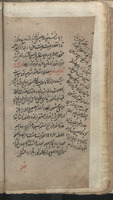
Malik 2551 folio 15 verso
Main: the rental [contract] became enforceable [between them]. Written in such-and-such month. Copy (surat) of a land grant (soyurghāl) obligation (tamassuk) The reason for writing these words is that 'Issā Khan Beg Safavi, son of the late Amīrat Khan Beg Safavi appeared in an Islamic court (muhakama) in Ardabil and [added on the right margin upside down: reconciled and contracted [out] to the elevated stationed, not in need of a title, Murtazā Qulī Khan Safavi son of the late Safī Qulī Khan Beg Safavi ?Mirza?] the entirety of one portion (dāng) of his soyurghal from the village of Kūrīm [maybe Kūrāyīm?] located in the region of Lakacha Musallā?, that need not be described and bound, from the date of the beginning of such-and-such month from such as such year (yīl) for the duration of eight complete years with the contract as described [whereby half the time is] four years, for the price of twelve Tabrīzī Tūmāns, half of which is six Tabrīzī Tūmāns. The aforementioned Murtazā Qulī Beg accepted after a year and the contract was carried out and is in place. With the reception of the amount of the recorded reconciliation with 'Īsā Khan [Murtazā Qulī] acknowledged and agreed upon [it]. Based on this the entirety of the proceeds and benefits from the one portion (dāng) of his ['Īsā Khan's] soyurghāl from the aforementioned village, all that which he would receive from the peasants and farmers [rightfully] belongs to the owner of the soyurghāl, from the Juft Bāshī and others, Murtazā Beg will acquire (akhz) for himself... Margin: Petition (‘arza) to the king (pādishāh) The petition of the son of the servant of the Khan The scattered dust of the angel-guiding threshold is turned into kohl (surma) for theseexpectant eyes, to present to the attention of those standing at the foots of the caliphate’s throne (sarīr-i khilāfat) of the elevated caesar (qaysar-i a’lā) that... Also The dust of the caliphate-marked threshold is turned into kohl (tūtiyā) for these expectant eyes to present to the attention of... continue as previous. The petition of the son of the servant of the Khan The scattered dust of the angel-guiding threshold is turned into kohl (surma) for these to the son of the king (pādishāh) The petition of the lowliest of subjects It is presented to the attention of the residents of the sacred and elevated angel-guarding threshold that... -
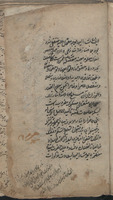
Malik 2551 folio 18 recto
Main: the aforementioned [female seller] for the trusted (mu’awwal ‘alayh) sum, without any disputing disputer, and all of the shares of the known and identified in detail properties [held in] common are attached, as described by their limits, rights, subsidiaries, attachments, additions, and inclusions, both old and new, inside and outside, attached and detached, constructed (‘āmir) and uninhabited (ghāmir), [and he bought them] for the price the value and weight of which is known, and it is four hundred thousand Tabrīzī dīnārs and thirty quarters of mithqāl of minted coins, of coins [used] in trade, the value of which is emphasized in the original and explained here (ta’kidan al-asl wa tawzihan lah), fifty thousand dīnārs as explained [was] the correct, legal purchase, including the contract of ‘requiring (ījāb) and accepting (qabūl)’ and surrendering and accepting surrender, and owning and being owned, and taking control of and relinquishing control, in a state of sound health, devoid of deficiency and corruption, and her excellency the grand sayyida, the aforementioned [female] seller, in prosperity, [relinquished] the aforementioned Margin: The date of wedding and charitable act of Zahīr Ibrāhīm, the darling son of Ustād Khalīl Birinjī, which was said and written on that [wedding] gathering, may the wedding be congratulatory for them, was the year of the horse (yūnt), 1140 AH /1728 CE. God almighty willing, it will be blessed and resulting? of faithful children. END -
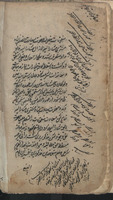
Malik 2551 folio 18 verso
Main: [properties] to the control of the sayyid and virtue sheltering excellency, the aforementioned customer, may he never decline. He took possession whereby they became a property amongst his properties and a right from amongst his rights, halting the ability to cancel a contract, as required for legal sales and contracts, with full knowledge of it, especially the capacity [due to] price discrepancy (khīyār-i ghabn), even if it is stark. He guaranteed his ability to actualize [the agreement], a legal guarantee where if someone appears with legal rights (mustahiq) to all or part of [the properties in question], he will be able to fulfill the value of the share or deliver the purchased [portion]. The sayyid sheltering excellency, the aforementioned customer, surrendered the entirety of the price of the prosperous [properties] to her excellency the aforementioned [female] seller. He surrendered and was thus free of the obligation, in whole or parts, of the aforementioned price, a legal immunity, halting the right to demand and inquire after the legal appraisal and the knowledge of the contracting parties and the price on the day. Margin: In the margin of this contract should write: Properties Waterways located in the territory of such-and-such Properties Waterways located in the territory of such-and-such Properties Waterways located in the abode of guidance Ardabīl with the houses except for the share of the bathhouse and orchards the names of which are known to you? And the share of the bakery shop Properties Waterways located in the territory of such-and-such based on what is herein, Near such-and-such – two portions (dāng) Near such-and-such – half portions (dāng) Near such-and-such – two sixteenths (sha’īr) The farm of such-and-such – two taqrīm? The farm of such-and-such – two portions (dāng) The entirety of Two commonly held (shāyi’) portions (dāng) from the half of one portion (dāng) of the village of so-and-so, in accordance to the clear confirmation of the sayyid-sheltering excellency Mahdī Aghā Mīrzā Safavi is ?? and [set aside] destined for the esteemed brother, the sayyid and diffusion outfitted Amīr ‘Alī Akbar Mīrzā Safavī. Written in the month of so-and-so year 1130? AH -
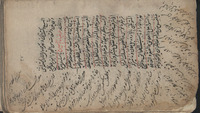
Malik 2551 folio 19 recto
Main: of the sales. This was written in the month of Jumāda al-Awwal, the year of nine hundred and eighty-two [982 AH / 1574 CE] from the migration of the prophet, praise and commendation be unto him. Petition (‘arizah) to Imam Husayn Oh lord, oh master, Oh Husayn son of ‘Alī, may God’s peace and greetings be upon you all. Peace be upon you, the oppressed martyr, the unique stranger who is bereft and infallible. May God’s greetings be upon you and upon your illuminated soul, upon your purified grandfather. He [I] desires the dust [under] your shoes and praises? your footsteps. May he accept the honor to serve you and be acknowledged at your threshold (‘atabba), and perform pilgrimage to your grave with his head and eye, your servant, the wretched one, residing in Ardabil, so-and-so. [So far,] this resolve has not come to fruition due to hindrances, obstacles, occupations, and entanglements, as well as poverty (faqr) and destitution (fāqa). He begs the servants of your teachings to guide and direct [him] Margin: Content of an Edict [to appoint a] Chief (kalāntar) [of a locality] It has been established that since olden times, due to abundant consideration and benevolence towards peasants and inhabitants who are the rare deposits of His excellency the creator, his station be the highest, the [position of] chief (kalāntar) of the aforementioned location Qizil Almakh? was given and comes back to elevation and grandness sheltering, the shah lover (shahsivānī) so-and-so; the aforementioned is described and well known through his charitable acts, low greed, and goodness of spirit. Therefore, in the contract for the aforementioned city? in the year so-and-so to be the chief and ? of the peasants of the aforementioned location, it is in accordance with the enduring edict for the responsibility and precedence of [the position] to be entrusted and returned to the elevation sheltering aforementioned by the order of the aforementioned executor and advisor of affairs. And the accouterment and ceremonies are as should be and befitting. There will not be a moment of faltering or pause in [the work]. In regards to expenditure and interest collected from the taxes, the development and cultivation (ābādānī) of the territory (mamlakat), and advocate for the properties of the peasants, he will exercise the utmost diligence and always display the virtue of his good service. -
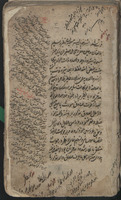
Malik 2551 folio 2 recto
Main: has died [leaving] four blessed sons, named Nazīr, Salīm Balqān, Ayn-Alī, and Alī-Muhammad Sahibgharān? and a daughter named Bashar and a single child bearing (zāt al-walad) wife, Parī daughter of Fayz-Allah [and] only [them]. After a while, Bashar lost the protection of the aforementioned mother, Parī, and there were no others (lā gayr). Afterwards Salīm, relying on his integrity and representing the other aforementioned inheritors, [brought] a claim against his brother Nazīr. The summation of the claim is that after Sādiq died, the inheritor [Nazīr?] took a specific amount from Sādiq’s fortune and retained and seized it for himself, using it as capital (ra’s al-māl) for his petroleum (naft) shop (dukkān) and the expenditure of his wedding feast, and [now] it is onto you [Nazīr] to ?? and surrender up to the amount of our share. In response, Nazīr denied it and claimed that my presumed share (hassayih farziyya) from my father, from all that is known from the aforementioned, our father Sadiq, Margin: How to submit a petition to the king (pādishāh) The petition (‘ariza) of the lowest of subjects (bandagān) so-and-so [reached] was presented... The angel-behaving Caesar, the heaven-stirruped prosperous one, the essence of holiness... The direction of prayer for the world and its inhabitants ??? [name?] that as... ًShort letter of Repentance (tawbanamcha) Praise be to God who loves intentions and loves? my visage with his mercy and benevolence and absolves the sins of the criminals with his beneficence and fairness? and greetings and peace be upon the best of his creation Muhammad and his kin and progeny. The reason (bā’ith) for penning these words is that fortune became the companion of the refuge of honor Murād Beg Ahmad Ābādī who has pulled himself from the whirlpool of transgression onto the banks of salvation in order to [fulfill the expression] “I seek forgiveness from my Lord and repent onto him”. He has become remorseful (nādim) from his collection of forbidden acts (manāhī) and transgressions (ma’āsī), as in accordance with the content of the Hadith of the exalted Allah “turn to Allah in sincere repentance” [Qur’an 66:8], and has repented from drinking and debauchery and sodomy and fornication and stealing the property of others and consuming illegal interest (ribā’), and became distinguished by [rejecting] his own heinous acts. There is hope that he be of strong resolve [sure-footed] on this path, praise be to God, By the Truth of the Lord of men (‘ibād) [subjects]. Freedom Papers (azadnamcha) are as such: Praise be to Allah who protects the necks of the righteous ones from the fires [of hell] and provisions them with the choicest of virtues and strengths, and greetings and peace be upon his prophet and his kin and progeny. And then, the cause/reason for penning these legal [shar’iyya] words is that in accordance with the content of the Hadith “whosoever frees a believing slave, Allah will free all of his members, and their members, from the fire [of hell]”, ‘Izzat Ābādī Yusuf Khān freed and released from the yoke of bondage all the six-dāng members of one slave named so-and-so Bahman ?? for forty years?, to achieve closeness [qurba] to Allah and seek his contentment on the day of judgment as with other matters ??? and he [the slave] has control [ikhtiyār] to go wherever he desires. Written? Such-and-such month 1137 AH / 1725 CE Petition (‘ariza) and ? The petition letter of the lowest of the subjects ... reached the level of being submitted to the grand representatives ??? Petition (‘ariza) to the Mulla-bāshī Petition letters of the lowest of subjects reached the height of being received ... that as prior to this ... As he saw necessary, he dared impudence to offer a submission ... [Reached] the height of being submitted to the Haji the master of command ... -
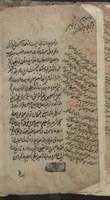
Malik 2551 folio 2 verso
Main: from the residence and household furniture, from cash or property, the copper dishware, sleeping attire, livestock (davvāb), property [upkeep] materials, granary, etc., few and many, that he had, remains [with] you and you must hand over to me an amount from all of them equal to my share (hissa). He had other claims as well. The dispute between them had gone on far too long and a group of benevolent and well-meaning reconciliation (muslih), intending to settle the dispute and ease the welfare of the two sides [of the argument], decided upon the following: the aforementioned Nazīr will pay, by way of a legal and correct reconciliation, the amount of one Tabrīzī Tūmān to the aforementioned Salīm, Ayn-Alī, Alī-Muhammad, and Parī and [in turn] abandon his claim upon his fixed portion (hassiya mu’ayyana) from what is known [to be left] from the aforementioned Sādiq, from his residence, household furniture, cash and property, many and few, so that their dispute could be settled. Based on this, the aforementioned Nazīr and Salīm ... Margin: It acquired the position of being written while the temperament [of the author] was distressed. Peace Agreement (sulh nāmcha) A legal confession (i’tirāf) was issued by the dignity-sheltering Jalāl Beg son of Murād Beg Qājār in nullifying any word or claim that he had made in relation to the felicity-effected Kāzim Beg son of so-and-so ?? a legal acknowledgment with so-an-so which was for the amount of three Tabrīzī Tūmāns was reconciled for the amount of two Tūmāns, as hereby described in the agreement. Henceforth, in no manner and for no reason will there be a claim or disagreement between him and the aforementioned. Written? such-and-such month, 1130 AH / 1718 CE Nullification Agreement (bātil nāmcha) Since the such-and-such amount of Tabrīzī [coins] based on a legal obligation of ?? and dignity-sheltering Muhammad Amīn son of Nadīr Khān Barāz? was taken by the hand of the lowliest subject Muhammad Safī al-din and the aforementioned amount was given to him, received by the faithful servant [??], based on the lack of the aforementioned legal obligation, it is determined that henceforth whenever the aforementioned obligation is presented it is considered nullified and without any degree of merit. Praise be [to God] and his greeting on the prophet. The cancellation Letter was penned. Written? such-and-such month. Seal?? [A thousand as the root of ones?] -
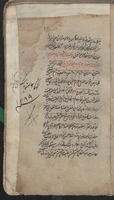
Malik 2551 folio 22 recto
Main: and at times the [letter] kāf is omitted [from final position ‘nk’ and only nūn is written], such that master [poet] Khaqani rhymed ‘you’ (san) [in Turkish] in verse with ‘lily’ (sūsan) and ‘wild horse’ (tawsan) [in Persian], where he writes (bayt), “My lily-scented, wild steed-natured Turk who calls unto me [says ‘you—san’ a lot]; where he to cast his gaze upon me, I would lose all decorum”. He is from amongst the trusted [ones]; may [divine] grace be unto him. The first page of a copy of the marriage contract (nikāhnamcha) of the exalted (elevation sheltering) Qarachqāy Beg from among the high ranking Qūrchī Bāshī[s] Praise be to Allah who made permissible (ahalla) coupling (tazwīj) and marriage (nikāh) and forbidden (harrama) fornication (zinā) and bloodshed (sifāh). Greeting and peace be unto his chosen one Muhammad, the explicator (mubayyin) of the permissible, the forbidden, and the lawful (mubāh) regulations; his pure descendants are exemplars of the community of deliverance so long as the evenings are replaced with the mornings. But then (va b‘ad), the intention behind writing these auspicious-intentioned lines is that, the organization of the world and the survival of the lineage of Adam is dependent on mating and contingent upon marriage. Committing unto a marriage requires largeness and wealth and is tied to the removal of poverty and hardship (‘anā), as God almighty says “Marry off those who are single among you and the upright among your male slaves and your female slaves. If they are poor, Allah will enrich them out of His grace, and Allah is all-bounteous, all-knowing” [Qur’an 24:32]. Furthermore, the act of mating is desirable by nature and preferable by religions; the one who acts upon it is accepted by and beloved amongst the masters of intellect (ūlū-l-albāb) and the one who abandons it is held in contempt and low regard by the masters of civility (arbāb-i ādāb), as the prophet, peace be upon him and his descendants, said “marriage is my tradition (sunna) and whoever turns from my tradition is not of my [community].” The stations of virtue. Margin: If someone is tied (basteh) [impotent] write this talisman (tilism). Year 1289 AH [1872 CE] -
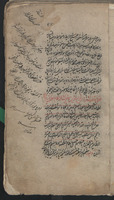
Malik 2551 folio 23 recto
Main: and an explicit and observed marriage, encompassing the entirety of religious conditions (sharāyit) and regulations (zavābit), including the totality of ethnic (milliya) items (lavāzim) and ceremonies (marāsim), from requiring and accepting and ?? the aforementioned bride (zawja) to the impediments of marriage, agreement (rizā), and representation [in performing the marriage contract], etc. and other matters related to it. The father of the aforementioned felicity and grandeur sheltering groom, in a manner from amongst legal manners, finds it incumbent upon himself to [purchase] one Georgian male slave (ghulām-i Gurjī) and one Georgian female slave (kanīzak-i Gurjīya) the value of both roughly was the amount of twenty Tabrīzī Tūmān using his own wealth and making them the possession of the aforementioned purity and chastity sheltering bride. This took place on the thirteenth day of the month of Dhu’l Hijja al-harām in the year 1078 [1668 CE] from the migration [of the Prophet]. Copy (surat) of the endowment contract (waqf nāma) of Mirzā Qavām al-Dīn Hātam Beg father of Nizām al-Mulk the Minister of Kirmān Praise be to God who is aware of the thoughts (zamāyir) of his subjects, who knows their secrets and who is in charge of their good deeds that will endow continuous charities until the promised day (mi’ād) flowing (mufīz) with complete blessings until the Day of Judgment. Greetings and peace be upon the seal of prophecy and the exemplar of the pure ones [the Safīyya— alluding to the Safavids], the revered prophet, the grand messenger, the master (sayyid) of Arabs and Ajams, he who subjugated Khusraw (kasrā) and the ring/seal (khātam) with justice and generosity, and unto his innocent (ma’sūm) descendants and his pure (tāhir) family, the ones through whom kingship (mulk) was achieved and through their guardianship (wilāya) the stature of religion was registered. And now (va b'ad) the content of these truth-revealing lines and the secret of these law-describing writings [zabūr—lit. psalm], is reporting and examining Margin: Four promissory notes Copy (surat) of a promissory note (tamassuk) [in Ottoman Turkish]: This is a copy of a promissory note: The reason for the composition of letters is that we have debt [due to the fact that] in the beginning of the month of Shaban of the year 1138/1726 we borrowed from Meḥemmed Çelebi hundred ghurush, half of which is fifty ghurush. God—may [His name] be exalted!—willing, upon the payment of [the said] loan by the end of 300 days may our promissory note be halved [ ripped into two? destroyed?]. ʿOs̱mān, the servant. -
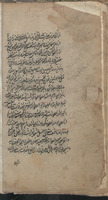
Malik 2551 folio 23 verso
Main: that through the grace of guidance by the Guide (hādī) and his divine favor, the blessing of divine assistance (ta’īd-i rabbānī), which is due to the purity of intention and sincerity of intent, so-and-so son of so-and-so made permanent (mukhallid) a correct (sahih) and legal (shar’ī) endowment and made eternal (mu’abbid) the explicit (sarīh) obligated (mar’ī) [must be observed] virtue (husn) upon the entirety and all of the designated properties and distinguished domains entailed herein. He [endowed] it upon his children with the condition that they do not buy it, sell it, or lease it and that the benefits, proceeds, rent, and revenues from them be distributed and divided equally amongst the children or “for the male shall be the like of the share of two females” (Qur’an 4:11). He consigned its legal management (tawliyat) to his own self while living, and after that to the oldest, most righteous, and the most guided (‘arshad—also oldest) of his blood-born sons and after that, to the oldest, most righteous, and the most guided sons of his sons, generation after generations and womb after womb, conditioned upon nearness. If, God forbid, the line of male children ends, the management will belong to the oldest amongst the male descendants of the female children, conditioned upon [possessing] the aforementioned qualities. And if the collective aforementioned qualities did not accumulate in one of the descendants of the children of the male or female children, possession of knowledge and righteousness are paramount. And if, God forbid, the endower’s line ends, the management of the endowment belongs to the most knowledgeable (a’lam), most righteous (aslah), and most devout (atqā) of the scholars (‘ulamā) of the age to spend in the designated expenditure or in other charitable causes (wujūh al-barr). In no manner of manners can the legal or customary commanders or administrators interfere with or possess this [endowment or its activities]; may the violators -
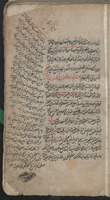
Malik 2551 folio 24 recto
Main: of the aforementioned conditions be showered with divine cursing and discontent, and imprecation and refusal of intercession on behalf of the refuge of messengers [Muhammad] and the exalted innocent Imams. “And should anyone alter it after hearing it, its sin shall indeed lie on those who alter it.” (Qur’an 2:181) The payment for the manager (haq al-tawliya) must be recorded as it is designated. A correct (sahīh), eternal (mu’abbid) endowment and an explicit (sarīh), permanent (mukhallid) virtue (husn), until God inherits the earth entirely. May God accept it from him and benefit him through it. “The day [of resurrection] when neither wealth nor children will avail, except [for] him who comes to Allah with a sound heart”. (Qur’an 26:88-89) Letter of Repentance (tawba nama) ?? the Intimate (muqarrab) of the Khāqān, Ūghūrlū Khān Īshīk Āqāsī Bāshī Praise be to God who commands the sinners from amongst the faithful to repent and his verse which says: “O you who have faith! Repent to Allah with sincere repentance!” (Qur’an 66:8) He who forbids the extravagant from amongst the people due to His mercy and forgiveness and His saying is: “Say [that Allah declares,] ‘O My servants who have committed excesses against their own souls, do not despair of the mercy of Allah. Indeed, Allah will forgive all sins.” (Qur’an 39:53) Greeting and peace unto the intercessor of the sinners and transgressors, who was sent as a mercy for the worlds and his innocent family and his pure offspring who are the intercessors for the repentant. And then, in accordance with the sincerity enacting the logic of the words of the all-knowing King [that say] “Indeed Allah loves the penitent and He loves those who keep clean” (Qur’an 2:222) and along with the truth-filled content of the correct prophetic hadith and the explicit Mustafavī [from Mustafā, i.e. Muhammad] news [that says], “one who has repented from sins is like one who has no sins,” the distasteful [stain] of transgression can be removed from the mirror of mankind’s existence with the water of repentance. With the reasoning of the verse and permissive? guidance [that says] “Rally to Allah in repentance, O faithful, so that you may be felicitous.” (Qur’an 24:31) all of the faithful and the entirety of the Muslims turn their desiring visage Margin: It has been narrated from the exalted innocent Imams, upon them greeting and praise, that [the expanse of land] from the east to the west is one hundred and forty-eight thousand leagues (farsakh) [one farsakh is three miles] which includes sea, land, built environs (ma’mūrih), and ruins (kharābih). From amongst this, fifty-one thousand leagues are wilderness (biyābān) [barren land] which is the residence of demons (dīv), fairies (parī), gazelles, wild animals (darrandagān), and mines (ma’ādín), forty-eight thousand leagues are the seas and forty-seven thousand leagues are the built environs (ābādānī). From amongst this [the built environs], twelve-thousand leagues are the lands of India, six thousand leagues are the lands of Rūm, four thousand leagues are the lands of China and Indochina (māchīn), three thousand leagues are the lands of East Turkistan (saqlāb) and Tibet (sanjāb), one thousand leagues are the land of Bulgaria, four thousand leagues are the land of Abyssinia, Zanzibar and Yemen, one thousand leagues are the land of Greece, two thousand leagues are the land of the Kurds were cannibals [live], one thousand leagues are the land of Davālpās [mythical creatures with human bodies and legs like bands that they wrap around the body of their human prey] five thousand leagues are the land of Gog and Magog, one thousand leagues are the land of the desert (sahrā) where humans have not yet reached, eight hundred leagues are the Vāq Vāq Islands, and one thousand leagues are the lands of the dominion of Islam, form Indus (sind), Egypt, Levant (shām), Fars, and some of Khurāsān, the two Iraqs, Jerusalem, mount Alburz, and others. These few words were finished in the manner of ?? written [by] Mullā Muhammad Qāsim. [written] in the month of Rajab of the year 1138 AH [1726 CE]. [seal]: ??? Qāsim ??? -
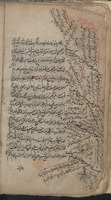
Malik 2551 folio 24 verso
Main: toward the threshold of the needless one, in particular at [this] time when the Pādshāh of time (zamān), the commander of the world, the faith fosterer of the age (dawrān) have all spent their great (vālā nahmat) efforts to organize the undisputed religion and promote the sacred law (sharī’at) of the lord of the messengers [Muhammad]. They will not abandon, even slightly, the necessity of propagating the religion of their fathers and ancestors, all of whom are pearls of the sea of Imamate and jewels of the heaven of innocence and caliphate. At this time, everyone, from elite to common, pursuing the edict of ‘people follow the religion of their kings’, have not veered off the straight path (jādah) of the illuminated law (sharī’at). Having traversed the path of the mystics [those who have crossed ‘the path’], they have carved devotion and piety upon their minds. [Now] a community whose fathers and ancestors have thrown the collar of servitude around their necks of subjecthood, similitude, and disciple-ship of this vilāya-marked household (dudmān), and identified the desire to please their master, be it hidden or open, as the capital [to build] their physical and spiritual worlds. For them, it is necessary and appropriate to step forth with sincere-intentioned feet and obey and follow their God. As such, the subject of the threshold, Ūghūrlū Shāmlū, grasps unto the ‘firmest handle’ (‘urwat al-wusqā) of penitence (inābat) with hands of supplication, placing the head of surrender (taslīm) and submission (istikānat) upon the dust of inability and regret, to repent from, become remorseful, and regret all [he has done] that is forbidden and impermissible, in particular drinking wine which is the mother of all maliciousness (um al-khabā’is) and premier of all infractions (r’ūs al-khatāyā). May God almighty accept it from him by his comprehensive benevolence, if he comes to Him with a sound heart. He has decided and made his intention resolved that henceforth committing grand [sins] (kabāyir) and avoiding minor [sins] (saghāyir) ??? It is necessary to avoid and shun the heinous acts and shameful actions and ?? Margin: On the Locations of the Sun in the Houses of the Constellation (burj) - Know that the moon traverses the twelve constellations in one month which is thirty days, and the sun [does so] in a year. Sun in the [house of] Gemini will linger for thirty-two days, and for thirty-one days - [Sun] This means that when the sun goes into the house of Gemini the time is the end of spring; it lingers there for thirty-two days and then moves onto the house of Cancer. - [Thirty-one] When [the sun] comes to the house of Virgo the time is the end of summer; it lingers there for thirty-one days and after that moves onto the house of Libra. In Aries, Taurus, and Leo/lion, with some reorganization. - [Aries] This means that [when] the sun is in the house of Aries the year renews; it lingers there for thirty-one days and then moves onto the house of Taurus. - [Taurus] This means that [when] the sun is in the house of Taurus it is time for floral bloom; it lingers there for thirty-one days and then moves onto the house of Gemini. - [Leo] When [the sun] moves to the house of Leo it is the height of hot weather; it lingers there for thirty-one days and from there … - [Reorganization] [The house of] Cancer is [omitted] here due to the meter of the poem; when the sun arrives in this house it is the beginning of the summer. It [lingers there] for thirty-one days and then moves onto the house of Leo. In Aquarius, Libra, Pisces, and Scorpio [it lingers] for thirty [days] - [Aquarius] When [the sun] arrives in [the house of] Aquarius it is the middle of the winter; it lingers there for thirty days and then moves onto [the house of] Pisces. - [Libra] When [the sun] arrives in the house of Libra it is the beginning of autumn; it lingers there for thirty days and then move onto the house of Scorpio. - [Pisces] When [the sun] moves onto [the house of] Pisces it is the end of winter; it lingers there for thirty days. This is the reason why the end of the winter is called Pisces. - [Scorpio] When [the sun] arrives in [the house of] Scorpio it is the middle of autumn; it lingers there for thirty days and then moves onto [the house of] Sagittarius. And for twenty-nine days, and not a day more or less, it [lingers] in Sagittarius and Capricorn. - [Sagittarius] When [the sun] arrives in [the house of] Sagittarius it is the end of autumn; it lingers there for twenty-nine days and then moves onto [the house of] Capricorn. - [Capricorn] When the sun moves onto [the house of] Capricorn it is the beginning of winter; it lingers there for twenty-nine days and then moves onto the house of Aquarius. -
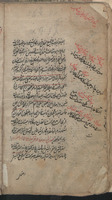
Malik 2551 folio 26 verso
Main: [from the depth of his heart welcomed] the contract (sighah) of repentance and became remorseful and sorry, and regretted, bemoaned, and repented the entirety of the heinous acts and shameful actions and other forbidden and impermissible acts, in particular drinking of alcohol (khamr), consuming narcotics (akl al-banj), and gambling of any kind, in particular backgammon and chess, and [repent from] uttering untruths and accusatory words towards and gossiping about Muslims. He has decided and pledged his intention henceforth not to commit grand [sins] (kabāyir) and not to persist on minor ones (saghāyir). May it bring him closer to God, praise be unto Him, and achieve His contentment. May God almighty accept it [repentance] from him by his comprehensive favor, and resolve his steps upon the straight path. Indeed, He is a compassionate absolver. And in this manner, the penitent Muslims and the faithful must consider the aforementioned to be in the ranks of the righteous and amongst the penitent ones. The reasoning of “Indeed some suspicions are sins” (Qur’an 49:12) should not be avoided and no corrupt thought should be applied to him. And likewise, the aforementioned penitent must, in accordance to the logic of [the prophetic hadith] “beware of the accusations,” find it necessary to avoid and avoid companionship and intimacy with corrupt (fāsiqān) and ill-acting (bad-kārān) men and not engage in discourse (suhbat) with corrupt women (fāsiqah), debauchers (fujjār), demons (shayātin) amongst men, and seditious ones (ashrār). It was written in the month of so-and-so. Copy of the Letter of Repentance of Mawlānā Muhammad Taqī, known (mu’arrif) in ‘Abbās Ābād and Isfahān Increasing praise (sitāyesh) and immaculate devotion is befitting for the singular one (yigānah), the unmatched essence of whom is free of the taint of pretence and imitation, as there is nothing like him Margin: Names of the Turkish Years in the Meter of a Quatrain First count the mouse, the cow, the panther, and the rabbit, [mouse] sīchqān yīl, [cow] ūd yīl, [leopard] bars yīl, [rabbit] tawshqān yīl Once you pass these four the whale and the snake arrive. [whale] lūy yīl, [snake] yillān yīl Then the count moves onto the horse and the sheep, [horse] yūnt yīl, [sheep] qūy yīl The monkey, the hen, the dog, and the pig come in the end. [monkey] pīchīn yīl, [hen] tukhāqūy yīl, [dog] īt yīl, [pig] tangūz yīl -
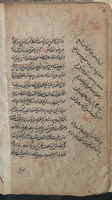
Malik 2551 folio 27 verso
Main: [imitating and following their manner] and their efforts are due to guidance (hidāyat) and faith (īmān), and violating and withdrawing from laws (sharā’ī) and regulations (qavā’d) is akin to ignorance and loss. And then, since from amongst the seven rights (al-huqūq al-sab’at) that are incumbent and mandatory as an obligatory effort of the faithful [Muslims], [one] is observing [the tenet that mandates] speaking well about and honoring one another, as in accordance with the hadith “revere him in his absence” and conforming to the hadith “the lowest person is one who humiliates others the most”, the lowest people are those who demean others. And in accordance to the hadith “Whoever belittles a poor Muslim, has belittled the rights of God and God will belittle him on the Day of Judgment unless he repents”, disdain toward Muslims is disdain toward God himself for which God will be scorn him on the Day of Judgment unless he brings his scroll of deeds to be confirmed by the recordkeeper of repentance. For whenever the sapling of penitence sprouts from the ground of one’s heart, once the gardener of forgiveness-seeking nourishes it with water of penitence from the streams of his teary eyes, indeed it will generate [divine] acceptance [and forgiveness]. Therefore, the provider of explanation (mu’arrif) and proof (hujjat) of Abbās Ābād and Isfahan, Mawlānā Muhammad Taqī Tabrīzī, became remorseful and repentant from the entirety of forbidden [acts] and collective sins, in word and deed, in particular insulting and gossiping about Muslims and denigrating and belittling and imitating (taqlīd) the faithful, and forego rebellion-inspiring acts and hurt-inflicting words. Verse: I will never hurt a heart, for I fear that it is where you reside. And from the depth of his hearts he resolves [to henceforth not employ the tongue of ridicule and mockery,] Margin: In the meter of Murakkab [meaning ink in imitation of a meter] If you want a good writing utensil (midād) [a black color pencil] sulphate (zāj), take two dirhams tannic acid (māzū), ten dirhams [tree] sap (samgh), and three dirhams [black] sulphate (zāj), With three dirhams ash (dūdih), two dirhams salt, and half dirham of indigo (nīl) And one and half dirhams of good quality saffron, Add half dirham of Egyptian rock candy, [Mix together] until the ink is produced in the inkwell. And also: Of equal weight are ash (dūdih) and [black] sulphate (zāj), of equal weight of both is tannic acid (māzū), Of equal weight of all three is [tree] sap (samgh), and then apply elbow grease [to mix them] -
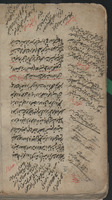
Malik 2551 Folio 3 recto
Main: were contented with and [verbally] acknowledged (qā’il) the aforementioned reconciliation and have abandoned their claim, whereby the legal reconciliation contract was written between the two, fixed and represented, and the amount of one Tabrīzī Tūmān as the reconciliation sum was sent from the aforementioned Nazīr and received by the aforementioned Salīm for him to distribute and apportion amongst themselves [the claimants]. Whenever they lay a claim against this [reconciliation agreement] it is nullified. Again, the aforementioned Salīm legally (shar’ī) attested, stating that if any of the old and young inheritors of the aforementioned Sādiq bring forward a claim he will manage to respond to them and quiet them. Written? such-and-such month. This is an Allotment Letter (hissa nāma)- Praise be to God, the owner of the skies and earth, and greetings and peace be upon his prophet, Mohammad, and all of his kin. Now, the intention behind writing these words, the legality of which is clear, is that since the late Muhammad Qulī Beg, son of Pīrī Beg, has passed on from the protection of two adult sons named the dignity-sheltering ... [cont. on next folio] Margin: Upper right: Confirmation Certificate (tasdīq-i daftari) Allowances (marsum)? The Year of the Ram, Hasan Jilūdār, who [entered] in a three-year contract? for the rent of a copper mine located in Buna Bar as delineated below, it is established that the bailiff (zābit) and the renter pay? the mentioned sum (vajh) in the customary manner. In such-and-such year the amount of such-and-such Tabrīzī Tūmān. Written? Such-and-such month of the year 1120 AH / 1708 CE. Left: Salaries (mawājib) for the properties of Bam? Salary – The animal attendants of the honorable so-and-so in the year of the ram. Amount of such-and-such Tabrīzī So-and-so – For three months; For the purpose of ... So-and-so – For one year; For the purpose of ... So-and-so – For two years; For the purpose of ... So-and-so – For one month; For the purpose of summer? (sayf) Order? (parvāna) For the purpose of ?? it arrived/was given to ??? for the cost of ???. Written? in so-and-so month 1120 AH / 1708 CE. Surety Contract (kifālat nāmcha) I, the servant of the threshold so-and-so, became the insurer of Muhammad Talib, [guaranteeing] that whenever he is requested to be present in the elevated court (dīwān-i a’lā) by the noble Hajiya residing in the city of Rasht for the purpose of recognition by the so-and-so store keeper (tahvildārī), it is the responsibility of the guarantor to [ensure] his presence. Written? such-and-such month. Power of Attorney (vikālat nāmcha) Aqa Muhammad, son of so-and-so, made the dignity and eminence (ma’ālī)-sheltering so-and-so his absolute attorney and deputy for the purpose of acquiring and reclaiming the amount of legal bonds from so-and-so son of the late so-and-so, so that God willing, he has the power of attorney to after recovering them hand them over to so-and-so and ... myself. This is legal and correct that ... Lower Left: ??? chancellory register (daftar) It is presented that the owner of this petition so-and-so did not have any shortcoming? (taqsīr) in his service. As such, he [the sender or the recipient of the petition] is authorized to [request] and put an [official] seal on whatever he decides upon. Response from the lowly one?? in the chancellory register (daftar) As the [title?] so-and-so the First Equerry confirmed the service of the sender of the petition, please authorize the penning of the confirmation?? of his position? in such-and-such year ... -
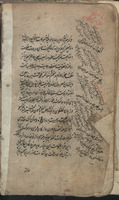
Malik 2551 folio 31 verso
Main: It is required from the village leaders (kadkhodā), and from other peasants (ru’āyā) and underlings (mutawattī) of the village collectives and subsidiaries of Yazd, the Abode of Worship, that everyone acknowledge [the efforts of] and obey his excellency so-and-so, during the duration of his rule, for he has secured the pure shari’a (sharī’at-i mutahhara) with his generosity. The effects [of his securing the shari’a] are evident, they strengthened the weak, and respected the [rights] of peasants. Considered indispensable and vital to the obligations of his [ruling] wisdom, he ensured the welfare and health of dervishes (darvīshān) and guided his intentions (azīmat) to affect their freedom (farāgh-i bāl). [In so doing] with hands of magnanimity he stuffed the eyes of greed with the dust of indifference (bīnīyāz) and broke the walking legs of the slanderers and depraved-ones with the hammer (matraqa) of reprimand and tied the speaking tongue of the backbiters and seditious ones with the magic of justice. In this manner, he opened the gates of gaiety (bihjat) and happiness (masarrat) on the helpless and destitute (masākin) and built anew the bases of the justice-fostering structures and the pillars of the justice-spreading habitus (umrān) that had been destroyed due to the high winds of misadventure. Were he to govern this territory (dīyār) in such a fashion, he will water (sayyān) the farmland of desires of the residents of this location. The proof-readers (musahhih) should provide their witness testimony on this page. Margin: About the science of where the moon is in each constellation Whatever has passed of the month double it Meaning: if you want to know which constellation the moon is in look to see how many days has passed from the month then double it, meaning multiply it by two. Add a five to its top Meaning: add five to the doubled number and see which constellation the sun is in. Then from that constellation to each subsequent constellation count it in measures of five. For every five add ten to the house of the sun So in whatever constellation the last five from the [number for the] house of the sun falls into, or is less than five, four, three, two, or one, that is the house of the moon. Take the constellation and that is where the moon is. Meaning: the house …[missing due to repair] also. For example, if seven days have passed from the beginning of the month, multiply it by two and that is fourteen, then add five to it and it is nineteen. So the sun will stay in Gemini (jawzā) [maybe Taurus (thawrā)] for five days, in Gemini (jawzā) for five days, in cancer (saratān) for five days, and in Leo (asad) for four days. The Moon is in Virgo (sunbula). Whatever is less than five, multiply Meaning: whatever is less than five, multiply it by six, meaning six?? By six and that is the degrees (daraj) on the scale (maydān). -
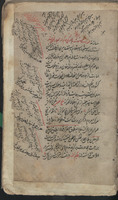
Malik 2551 folio 32 recto
Main: Copy (surat) of the Witness (shahādat) Statement from the Testimony that Was Given to Sulūkī, the Ruler of the Abode of Worship [Yazd]– It is witnessed, reported, clarified, and narrated by the community and residents of Yazd, the Abode of Worship, who are amongst the grand sayyid, noble scholars, and village elders deserving of respect, who retain the knowledge and information that so-and-so, during his governorship and period of retaining the position of Amir, veered away from the path of justice and fairness. He opened the hands of encroachment (ta’addī) and usurpation (tatāvul), surpassed oppression and corruption beyond the limits of equity (i’tidāl), and crossed the paths of misbehavior and abandoned the observance of respect. He has extended hardship and corruption to the peak of perfection, paying no heed to the words of the [wise] hakims who have said, Shaykh S’adī: Do not harm the hearts of others as much as possible; if you do you only harm yourself. Eventually, from the heinousness (qubh) of the path he was on, [due to] his tormenting the masses, and the inauspiciousness of his cruelty and inhumanity, some of the peasants, in accordance with the saying: “escaping what is beyond the ability of mankind to bear is amongst the prophetic tradition,” took to the calamity of exile over residing in the homeland and chose the hardship of traveling over the comfort of closeness [to homeland], they [the peasants] gathered their interest and headed to other locations. Anvari: If the tree could move from one location to another. Margin: Also: Count what [days] have passed from the month, Consider each [multiplied] by twelve. Then look to see which house the sun is in, Begin [counting] from the second constellation. Then compose the design in divisions of thirty, Until you get to where you desire to be. The constellation is where the [calculated] angel shows, And the exact math [to achieve it] is easy. Also Knowing [the Location of] the Moon in Each Constellation Consider each day of the month a thirteen, Meaning: if you want to know which constellation the moon is in, look to see how many days have passed from the month and make that into a thirteen, meaning turn each day that has passed into a thirteen [multiply by thirteen]. Then add twenty-six to it and estimate. Meaning: add twenty-six in addition to the thirteen and estimate, meaning calculate what the total number of days is. From each constellation to the house of the Sun is thirty days, Meaning: take thirty for each constellation from the house of the Sun Meaning: give each constellation thirty and see how much is remaining and which constellation is each month from and if it is more than thirty. Admire me in the field of the angles of the moon. If one is the remainder it is first degree from that constellation; if two is the remainder it is the second degree from that constellation in which the moon is. -
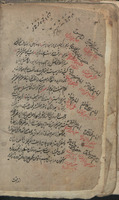
Malik 2551 folio 32 verso
Main: it would neither suffer the hardship of the saw, nor the cruelty of the ax. A group that did not have the ability to move, did not [do so]. [poem:] “In times of necessity, when flight is impossible, the hand will grasp onto the hilt of a sharp sword” [by Sa’dī]. They disobeyed his written order (khat-i farmān) and stepped outside of his circle of obedience. As a community, they came to the threshold of the elevated-ranked (‘ālījāh) advisor (āsif), [where] they sent up to the heavens their cries of ‘woe unto me’ (vā vaylā) and wails of ‘calamity is upon me’ (vā musībatā), playing on truth-claims that, Sa’dī: “Supposing you are not one of the down trotted, if you see one has fallen, should you be standing [and not helping]? Do you approve that people burn in [the fires of] need, while you maintain your house and home [in comfort]?” After that, the ruler gave orders to appease their desires and opened the doors of compassion (shafaqat) and benevolence. He ordered that in the morning the court convene an extensive investigation (ghūrrasī). When the governance-sheltering (hukūmat-panāh) [one] became aware of this affair, at the end of that same day he commanded his warm-hearted (jahān-sūz) attendants (mulāzim) to appear in the markets and neighborhoods and arrest anyone they could see. Each and every one of the [ones arrested] [were beaten] with the excuse that they did not shut their complaining tongue (zabān-i shakvih) in the mouth of silence and were unable to bite their lip of grievance (lab-i shikāyat) with the teeth of patience. They were [then] taken, as if packages of powdered bones in leather bags (anbān) of the body, and dumped at the door of the vizier. Margins: His excellency the commander of the faithful [‘Alī] (peace upon him) the accursed Ibn Muljam martyred. Imam Hasan (peace upon him) the accursed Ibn Muljam martyred. Imam Husayn (peace upon him) the accursed Asmā martyred. His excellency Imam Zayn al-‘Ābidīn (peace upon him) the accursed Shemr martyred. Imam Muhammad al-Bāqir (peace upon him) the accursed Hishām ibn ‘Abdallāh poisoned. Imam Ja’far al-Sādiq(peace upon him) the accursed Rashid martyred with poison. Imam Mūsā al-Kāzim (peace upon him) Harūn al-Rashid martyred with poison. Imam Rizā (peace upon him) Ma’mūna al-Rashid with poison. Imam Muhammad al-Taqī (peace upon him) Mu’tasan Bā? Daughter of Ma’mūn martyred with poison. Imam ‘Alī al-Naqī (peace upon him) Mughayra martyred with poison. Imam Hasan al-Askarī (peace upon him) the accursed Mu’tamid martyred with poison. His excellency the master of the age (peace upon him) went into occultation during the kingship of the son of the accursed Mu’tamid. K L B ‘A L Ī 8 6 2 10 6 10 M H M D Kh A N 4 8 4 4 1 2 -
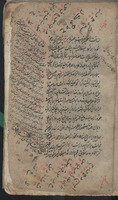
Malik 2551 folio 33 recto
Main: unaware of the meaning of this verse: do you not see that when the cat is desperate, it pulls out the eye of the panther with its claws? Once this image took shape in the eyes of the peasants, before the king of planets ascended the golden throne of the sky, the elders and youth, the white and black, the male and female, appeared at the court of the advisor of the realm, saying verse: “You too are waiting at the door with hope, so bring to fruition the hopes of those sitting at [your] door. If you do not wish your heart to see pain, release the hearts of those in pain from bondage.” After much aggression and countless violence, they took to the mosques where they closed the gates and broke the pulpits with the intention of burning them down. Then the very prudent vizier along with a large group of respected individuals prevented this obscene act and despicable deed. From there they went to the royal court where they summoned the governance-sheltering ruler. [However], when the aforementioned saw these conditions, he refrained from appearing [in court]. Verse: “How can I lift my head from shame and look at the friend (dust), when I was unable to offer a befitting service?” [by Hafiz] Eventually, the majority of the people descended like rubble and began screaming and wailing Margin: [On the right] …[missing] from one hundred when you sketch out in [divisions] of nine, One is left from ten, and one becomes nine?? The Jummal Calculation A B J D H W Z 1 2 3 4 5 6 7 Ḥ Ṭ Ī K L 8 9 10 8 6 M N S ‘A F Ṣ Q R 4 2 drop 10 8 6 4 2 Sh T Th Kh Z Ż Drop 4 8 drop 4 2 Ẓ Gh Drop 4 Lower odd [number] over the higher odd [number], lower even [number] over the higher even [number] The rule (qawl-i shārih) that says that the lower odd is taken over the higher odd means that one overcomes three ?? and again the explanatory rule that says the lower even takes over the higher even means that two overcomes four. Again, the rule that says the odd takes over the even that is less than it means five overcomes two. The rule that says the greater even takes over the lesser odd means that two overcomes one. As you calculate the value of the name [missing word] in the Abjad system, place it in divisions of nine [base of nine] meaning that Mīm is forty, Lām is thirty, Kāf is twenty so altogether it adds to ninety and this is [the value of] the name Malak. The name Riżā: Rā is two hundred, Żad is eight hundred, Alif is one, so the total [numerical value] of the name is one thousand and one. If taken into base nine, two will be left so the name Rizā, which pleases God (Razī Allāh), overcomes (ghālib) the name Malak. As such, they call this name, Malak, ‘defeated’ (maghlūb) due to this comparison. Therefore, after the … [missing word] that is left over that [name] is ‘overcome’ and the other from which less is left or nothing is left that is ‘defeated’. For example, if five is left from one name and seven from another name seven overcomes five. The odd [number] over the even [number] less than it and the greater even [number] over the lesser odd [number] The Grand Calculation A B J D H W Z Ḥ 1 2 3 4 5 6 7 8 Ṭ Ī K L M N S 9 10 20 30 40 50 60 ‘A F Ṣ Q R Sh 70 80 90 100 200 300 T Th Kh Z Ż 400 500 600 700 800 Ẓ Gh End 900 1000 -
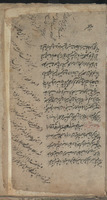
Malik 2551 folio 36 verso
Main: the one who does not lay invisible that pleasing method and that agreeable path. May that paradise-marked garden be ever green and grow from the watering spring of [divine] favor and the streams of benevolence. The foundations of unity are maintained (ma’mūr) and cultivated (ābādān) through the eminence and reception of an agent who intends on mediating and [may] the chains of friendship and sincerity be ?? and strengthened through [his] return. Written to an esteemed friend (dust): Oh God, bring that musk-producing deer back to Khotan; bring back to the meadows that tall-standing cypress tree. Tend to my wilting fortune with a [cool] breeze; meaning: bring back to my body that departed soul. What can [one] say from the severity of separation and what can [one] write from the intensity of departure of that soul-friend, that source of happiness, that darling jewel of the treasure chest of benevolence and sympathy, that illuminated star of the constellation of … [word omitted] and attentiveness, that mine of floral jewels of intimacy and kindness and that peal imbued sea who teaches others witticism??, that visage of the beauty of wisdom and that bookbinding (shīrāzah)of the book (sahīfah) of one-ness, the one without whose candle-like visage my eyes would have no strength. In truth, the usurping hands of separation Margin: The reason behind penning these words is that… appeared in the Islamic court … the reason and methods (chūn va hūn)…write an original affidavit (qasam nāmcha-yi aslī) The reason for penning these words…since at this time the grace-sheltering so-and-so ... claimed that so-and-so, wholly and fully and ...the aforementioned denies this meaning of no knowledge ...demanded from the claimant a clear and just witness testimony... was unable to form the female witness, the oath directed at so-and-so... took an oath according to the dictum that the word is the lord (malik) of knowledge...is the world, tomorrow is the hereafter that no knowledge of... I have not. These few words were penned by way of [writing] an oath [affidavit]. -
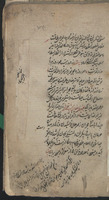
Malik 2551 folio 37 recto
Main: the beloved grasping at the soul of this feeble one, says die so that you may be released. The fire of desire in the heart of this burnt rose-bush of separation has flared up in such a way that the clouds of patience can only be killed by raindrops. Verse From your absence my days are spent in lamentation, two days in separation passed as though a thousand years. The hope is that as soon as possible the bridle of departure points toward this direction and those of us who have fallen into the wilderness of separation will drink from the spring of union, which is the water of life, so that the life that has departed from [my] body can return. Written to a dear (azīzī) and sincere (ikhlas pīshah) one: by the God other than whom there are no gods, there is no greater sadness in the world than separation. How long must one drink the poison of weariness from the cupbearer of separation and until when must one combat the endless army of sorrow in the battlefield of disappointment? And finally what will happen when the announcement of victory and the success of union leaves the long line of desire [in order] to become manifest and snatch the countless soldiers of separation from the arena of existence? Verse Margin: In order to wake up at night at any desired time this … “Say, ‘I am just a human being like you. It has been revealed to me that your God is the One God. So whoever expects to encounter his Lord —let him act righteously, and not associate anyone with the worship of his Lord.’” (Qur’an 18:110) -
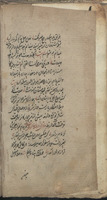
Malik 2551 folio 37 verso
Main: separation from the beloved even once defies patience; I do not know when the sapling of patience will bear fruits. [poem by Sa’di] O qibla of the desirous ones, from the excess of bewilderment I do not know what to utter and from the intensity of exertion I do not know what to write verse What I endured in the time of separation from you, is impossible for me to write in a single letter. [poem by Hafiz] Therefore, ? I will prevent the steed of the tongue to gallop (jawlān) in the hippodrome (mizmār) of expression and will relay [the discussing] of this affair to the speech [that will transpire] at the time of your ever felicitous presence. Verse He who desires to serve does not dare utter a word, as the nightingale only narrates his tales when the rose appears in the garden. [poem by Sa’di] The anticipating eyes of those ailing in the bed of separation are open like the narcissus. They expect a curing cup from the draught-house of union. May those in destitute (bīchāragān) no longer be abandoned in the sickness of separation. Written to an esteemed (gerāmī) friend (dust) I saw in a sweet dream that a moon face appeared; the image of his visage ended the night of separation. It was interpreted to mean that the one who has departed will return; I wish that he came sooner than the arbiter. Oh, refuge of the sincere ones, in accordance to the dictum verse As the promise of union -
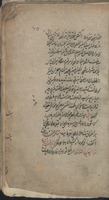
Malik 2551 folio 38 recto
Main: approaches, the fire of desire intensifies” the fire of desire has so intensified in the heart of this lifelong devotee that [only] the mute rider of union with that incomparable one can extinguish it. The intention was such that the head would take steps toward achieving the honor of kissing those feet. However, due to the ailing of the ever surging separation I can not find such strength in myself, and anyone who would have the strength to carry this weak powerless one did not cross paths with me in this world. I am deprived from the felicity of attending you. Instead, I am engaging in wrapping a belt (kamand afkanī) [as per the Sūfī tradition] and chanting incantations in the corner of the house of sorrow. Verse the back of the female camel will bend like the dome of heavens if Jāmī mounts her carrying the weighted burdens of his heart. [poem by Jāmī] O the location of the qibla, do not consider this quote a poetic exaggeration. Verse The weight of separation is so heavy, that the back of the mountain breaks when straddled with it. Written to a calligrapher (khush nivīs) friend (dust) O the one whose script exposes the hidden secrets -
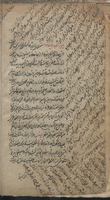
Malik 2551 folio 40 verso
Main: Written (to congratulate the grand vizierate of the acclaimed navvāb [political title]) Mīrzā Mahdī – this lonely one [occupying] the corner of humility, Muhammad Amin al-Waqārī, had the honor of being informed that in this realm [and time] the clothing-house of “God acts as he wills” [Qur’an 22:18] has cut the robe of grand vizierate to fit the qualified body of that progeny of the community of the mantle (āl-i ‘abā), and the dignity ? of highest ranking Sadrship [minister of religion, justice, and education] drew the position of vizier under his prosperous steps. [At this time when] a collective from the master of grace and perfection and a group from the community of talent and knowledge, adorn the pages of time with enumerating God’s innovations through which they announced their eternal presence until the day of judgment, it occurred to this languid mind that even though [I] do not [possess] the strength to wrestle with the strong armed one in the field of language and do not find the strength in myself to beat on the drum of equal combat with the fast riders of the arena of perfection, in accordance with the dictum “whoever resembles a community, he is one of them,” verse “When barley achieves the value of musk, it will be evaluated using the standards set for musk”. It is possible that the folio (barg) made with the highest quality silk drawn on the paper of your sincerity and the polished rays of favor from the sunbeam of the world-illuminating sun, will erase the taint of resentment Margin: This is the prayer (du’a) for a love contract (‘aqd al-mahabat) Know that this prayer is called a love-contract. From the one hundred and fourteen chapter of the noble Qur’an, any verse that invokes love is collected here. If anyone reads this prayer one time in his life with the intention of friendship (dustī) of [a certain] person, that person’s heart will become soft towards him like [warm] wax; it will burn for him. If he is a hundred leagues [away] from him, he will appear in front of him. From his love (‘ishq) and affection (muhībat) that person will go crazy (dīvānah). If he recites it on rock candy (nabāt) of other sweets with the intention of [it being for] a specific person and then feed the [sweet] to that person, he will no longer need patience with him and will be restless and uneasy due to [separation from] him. Between the ?? will not be. If he reads it once daily and fan it onto himself everyone will become friendly, tender, and kind toward him. If he recites it on rosewater and rubs it on his face … [according to the] opinion of the people he will appear adorned and well groomed. If he recites it on the wedding wax … seventy beads of rosary and recites it on every bead once and hangs the rosary at a location where the wind moves it …that person will go mad from his love and adoration. If he wants someone from far … he must burn incense and recite this prayer three times … until (??) and come to him. If he recites it on an apple and another fruit or on a perfume … that person eats it or smells it, it does the same and he will … any desire or yearning that he has with the belief ... We take refuge in God from the anger of God. In the name of God the Compassionate the Merciful … the life (jān) of so-and-so to the affection (mihr) and friendship (dustī) of so-and-so “Say, ‘O Allah, Master of all sovereignty! You give sovereignty to whomever You wish, and strip of sovereignty whomever You wish; You make mighty whomever You wish, and You abase whomever You wish; all good is in Your hand. Indeed You have power over all things.” [Qur’an 3:26] “Say, ‘If you love Allah, then follow me; Allah will love you and forgive you your sins, and Allah is all-forgiving, all-merciful.’” [Qur’an 3:31] Obey God and the messenger and they will love you …God and those who believe, the severest … God. “Yes, whoever fulfills his commitments -
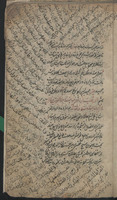
Malik 2551 folio 41 recto
Main: and cleanse the rust from the mirror of your mind. Verse “you are no lower than a speck, so do not demean yourself, express kindness (mihr) so that you can [like a speck] whirl and reach the pleasure house of the sun.” [poem by Hafiz] Therefore, having walked on the path of the great ones with open wings of aspiration and wandered in obedience of their [way] I set a few verses in the scheme of rhyme, declined in nature (??), hung the [verses] as if in a knot around his hands which were in turn grasping [his hem], and faced with the curls of Joseph, wrapped the chord of purchase around his palm. Verse This is enough, though the [market] is dull, I remain amongst those desiring to purchase him. [poem by Jāmī] Written to congratulate [the birth] of a son named ‘Ināyat who has been [divinely] gifted to the Mīrzā Muhammad Hāshim “What good news does the spring breeze bring from that rose stem, for my turban dances upon my head from jubilation!” May the grass adorner of the seasons benefit from the fruitful tree of eternal fortune. On a night more pleasing than the day of union, aided by the felicitous horoscope and the assistance of the ?? fate, a messiah-breath crossed paths with tired masses in the corner of separation. His soul reviving breath blew new life in the afflicted bodies of those ailing in the bed of disappointment whose hearts had abandoned their sweet souls. Khidr-like Margin: and is wary of Allah —Allah indeed loves the Godwary.” [Qur’an 3:76] Praise be unto God, lord of the worlds. O, God, make the two eyes of so-and-so expectant toward so-and-so through love and friendship (mihr va dustī) of so-and-so son of so-and-so by the truth of [the verses] “Which of you will bring me her throne before they come to me in submission?’”[Qur’an 27:38] “An afreet from among the jinn said, ‘I will bring it to you before you rise from your place. Indeed, I have the power for it and am trustworthy.’” [Qur’an 27:39] “The one who had knowledge of the Book said, ‘I will bring it to you in the twinkling of an eye.’ So when he saw it set near him, he said, ‘This is by the grace of my Lord, to test me if I will give thanks or be ungrateful. And whoever gives thanks, gives thanks only for his own sake. And whoever is ungrateful [should know that] my Lord is indeed all-sufficient, all-generous.’”[Qur’an 27:40] The compassionate and merciful. O Lord, make the ears of so-and-so receptive to the words and speeches of so-and-so through affection (mihr), kindness (muhabbat), and friendship (dustī) by the truth of [the verses]: “ say, ‘We hear and obey.’ It is they who are the felicitous.” [Qur’an 24:51] “It may be that Allah will bring about between you and those with whom you are enemies affection, and Allah is all-powerful, and Allah is all-forgiving, all-merciful.” [Qur’an 60:7] “Master of the Day of Retribution. You [alone] we worship, and to You [alone] we turn for help.” [Qur’an 1:4-5] O lord, …make so-and-so speaker of my words [make him talk about me] through love (mihr) and friendship (dustī) so-and-so ... “The woman in whose house he was solicited. She closed the doors and said, ‘Come!!’ He said, ‘God forbid! Indeed, He is my Lord; He has given me a good abode. Indeed the wrongdoers are not felicitous.’” [Qur’an 12:2]) “Some of the townswomen said, ‘The chieftain’s wife has solicited her slave boy! He has captivated her love. Indeed we see her to be in manifest error.’” [Qur’an 12:30] “They said, ‘By Allah! You will go on remembering Joseph until you wreck your health or perish.’” [Qur’an 12:85] “Grant us the straight path.” [Qur’an 1:6] O lord, friendship (dustī) and … so-and-so make captivating for me through love (mihr) and friendship and … “It is by Allah’s mercy that [you are gentle to them…]”[Qur’an 3:159] -
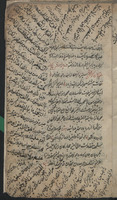
Malik 2551 folio 42 recto
Main: …evergreen from the rain clouds of divine favor, the Lord of glory, may they not experience sorrow due to the autumn [brought forth] by the cursing [of an evil eye–’ayn al-kamāl], and may the gardner of this noble garden be protected from the sorrows of destiny in his heaven-based shadows. Written inquiry about a dear one O combating heavens [destiny], I call on justice from your injustice and oppression, O discord-spreading skies, I scream from your spite [poem by Mohtasham Kāshānī]. What fire was this that put to waste and destroyed the honor (āb-rū) of the life harvest of this humble abandoned one, and what wondrous bead was this that unlocked the magic (shu’bad) of fate from the heavenly jewelry box (huqqa)? What horror spreading news was this that flew off the bird of soul of those secluded in the cage of disappointment? And what tempest rising tale was this that sent running children with tears from the sea to the plains [i.e., made eyes cry tears like rain] verse: What drunkenness is this that takes over us? Who is the cupbearer and where did they procure this wine? In truth the guard (shahna) of fate has not tied the hands of the hearts of these unfortunate ones for their souls to reach the point of exploding (bih garībān jān rasad) nor has a firm stick broken the feet of the tongues of these afflicted ones to enable them to take steps upon the wilderness of screams. In short, verse: Margin: “O company of jinn and humans! If you can pass through the confines of the heavens and the earth, then do pass through. But you will not pass through except by an authority [from Allah].” [Qur’an 55:33] O Fairies and angels, hear my speech and place my love (mihr) and affection (muhabbat) in the heart and soul of so-and-so son of so-and-so. By the Truth. “[A]nd remedied his wife[’s infertility] for him. Indeed they were active in [performing] charity (khayrāt) works, and they would supplicate Us with eagerness and awe and were humble before Us.” [Qur’an 21:90] “[A]nd united their hearts. Had you spent all that is in the earth, you could not have united their hearts, but Allah united them together. Indeed He is all-mighty, all-wise.” [Qur’an 8:63] “Among the people are those who set up compeers besides Allah, loving them as if loving Allah —but the faithful have a more ardent love for Allah”. [Qur’an 2:165] “He who strengthened you with His help and with the means of the faithful,” [Qur’an 8:62] “[A]nd united their hearts.” [Qur’an 8:63] “[A]nd love to be praised for what they have not done,” [Qur’an 3:188] I took away calm, patience, and repose from so-and-so son of so-and-so with love and affection. From so-and-so son of so-and-so. By the Truth, the first of prophets, Adam (pbuh) and the last of prophets … Muhammad al-Mustafa, peace be upon him and his kin, [those who have] not incurred [Your] wrath or are astray. O Lord (rabb) send to my home so-and-so son of so-and-so by the truth of “But when the eyes are dazzled,” [Qur’an 75:7] “and the moon is eclipsed,” [Qur’an 75:8] “and the sun and the moon are brought together,” [Qur’an 75:9] make me illuminated and sweet in the heart and eyes of so-and-so son of so-and-so O, Allah, o Compassionate (rahmān), o Merciful (rahīm). O Lord (rabb) by the sanctity of your grand name that is written in/upon …, make me dear and sweet in the heart and soul of … O Living (hayy), o …, o Lord (rabb), in the same manner that you soften iron in the hands of David (pbuh)